Saturday, September 5, 2015

Fresh Heirloom Vegetables _ Gazpacho

Despite the record heat we have experienced this year, the positive side of summer is always the vegetable garden. Although this year the vegetable doth protest.

Brassicas don't tolerate the heat very well, and couple that with extreme dryness_ the aphids have a field day. Interestingly the heirloom tomato plants are vibrant and healthy, but have been much slower to ripen than in previous years; we have had one or two here and there, and finally the first 20 pounds were harvested the middle of August.

Walla Walla onions were cured and stored in July. The Orange bell peppers have been gradually turning color throughout the latter part of August, and to say the least, the cucumbers have gone gangbusters.

With all ingredients available, it seemed time to make something special. Fresh raw vegetables mean Gazpacho. Sliced, diced and blended into a cold, refreshing and nutritious soup, it is perfect on a hot summer day. Serve as an appetizer, lunch, dinner, or at the end of a meal as you might find in Spain, and yes, Gazpacho's origin_ Spanish.

Recipes abound and to suit ones preference: use stale bread or no bread; smooth and silky puree or slightly chunky, pass the tomatoes through a sieve (to remove the seeds) or not; add water or no water... but one thing is certain_ fresh! vegetables! yes, a liquid salad!


Organic Heirloom Vegetable List:
Tomatoes: Cherokee Purple, Black Krim, Brandywine, and San Marzano
Sweet Peppers: Orange Bell and Bull Nose Bell
Jalapeno Pepper: Traveler
Sweet Onion: Walla Walla
Cucumber: Suyo Long and Armenian (no need to peel these)

Gazpacho from Diana’s kitchen

4 pounds fresh vine-ripened heirloom tomatoes, peeled and chopped
1 cucumber, chopped
1 sweet red or orange bell pepper, seeded and chopped
1 sweet (Walla Walla) onion, chopped
2 jalapeno, seeded and minced
2 garlic cloves, minced
1/4 cup extra-virgin olive oil
1 lime, juiced
1 TB balsamic vinegar
1 TB Worcestershire sauce
1 teaspoon cumin
1-2 teaspoon kosher salt (taste test)
1/2 teaspoon freshly ground black pepper


fresh basil leaves, chopped

Fill a pot halfway full of water and bring to a boil. With a paring knife make an X on the bottom of the tomatoes. Drop the tomatoes into the boiling water for 15 seconds, remove and transfer to cold water for about a minute. Drain, peel and core the tomatoes. Chop.

We hand chop all the vegetables and place them in a large mixing bowl with the tomatoes. Add the remaining ingredients: olive oil, lime juice, balsamic vinegar, Worcestershire, cumin, salt and pepper and stir to combine.

Transfer portions of the mixture to a Cuisinart or blender and pulse 5-10 seconds at a time to desired consistency (we prefer a more rustic soup). Return the mixture to a glass bowl.

Stir, cover and refrigerate for at least 2 hours or better yet, overnight. Serve with a slice of crusty bread or a crostini spread with some avocado. Simply delish!

Cook’s Note: One of our favorite cucumbers is the Armenian that we used in our first batch. No need to remove either the skin or seeds. And today I used the Suyo Long for a second batch, seeds and skin intact. Can hardly wait for tomorrow.


Tuesday, August 25, 2015

Cucumbers, Cucumbers, ah_ Pickles

Over the years we have grown various kinds of heirloom cucumbers, but the Armenian and the Suyo Long are by far our favorites_ both burpless and heirloom varieties, and the seeds are available through Baker Creek Heirloom Seeds.

We use both cucumbers in fermenting, but the Suyo Long is perfect this time of year for making Tzatziki Sauce to accompany those wonderful zucchini fritters.


A great snack, as a side dish, an hors-d'oeuvre ... cucumbers offer versatility and at only 16 calories in 1 cup, we look forward to a refrigerator well stocked from the garden vines.
 
Cucumbers in Vinegar and Water

1 1/2 lbs cucumbers, sliced
1 cup white vinegar
2 cups water
1-2 teaspoons Stevia (to taste) or sugar

Mix vinegar, water and stevia in a glass bowl. Add the cucumbers, refrigerate and allow to marinate overnight. 

Cook's note: depending upon you preference, vinegar to water ratio can be 1:1, 1:2, 1:3
Other variations include adding a garlic clove and/or sliced onions.

Cucumbers and Cheese 

cucumbers, sliced
Parmigiano-Reggiano, sliced

We enjoy an array of cheese and crackers, but why crackers? For a nice twist and a quick hors-d'oeuvre, try a slice of Parmigiano-Reggiano served atop a cucumber slice that has been marinating in the vinegar and water.

Cook's note: we have tried several kinds of cheese, but this is a favorite, as together it offers a nice balance of slightly sweet and sour with a little bit of salty.


Korean Cucumber Salad

3/4 to 1 lb cucumber, sliced
2 TB Rice vinegar
2 tsp soy sauce
1 tsp dark sesame oil
1/2 tsp kosher salt
pinch cayenne (optional)

Whisk together all ingredients and pour over sliced cucumbers. Refrigerate and allow to marinate 1-2 hours, and it's just as good the following day. Makes a great side or snack.

 Fermented Cucumbers_ Pickles

And not just any pickle, but the good old fashioned Dill pickle that we seldom see anymore. No vinegar!  Fermentation is ancient_ as old as life itself.

We're talking about a simple water-salt-garlic solution (and any other spice you might employ) that is allowed to naturally ferment and create live cultures_ probiotics_ that good bacteria we need in our gut. Studies show probiotic foods as helpful in keeping our digestive system in balance and combating problems with IBS (irritable bowel syndrome), lactose intolerance, vaginal yeast infections, Chron's disease...

In the past our fermentation had been limited to making sauerkraut, but we began fermenting cucumbers several years ago after having acquired Sandor Katz' book The Art of Fermentation, a rather in depth presentation _ the history and science behind all things fermented, should you be so inclined. Another book in our library is The Complete Idiot's Guide to Fermenting Foods.

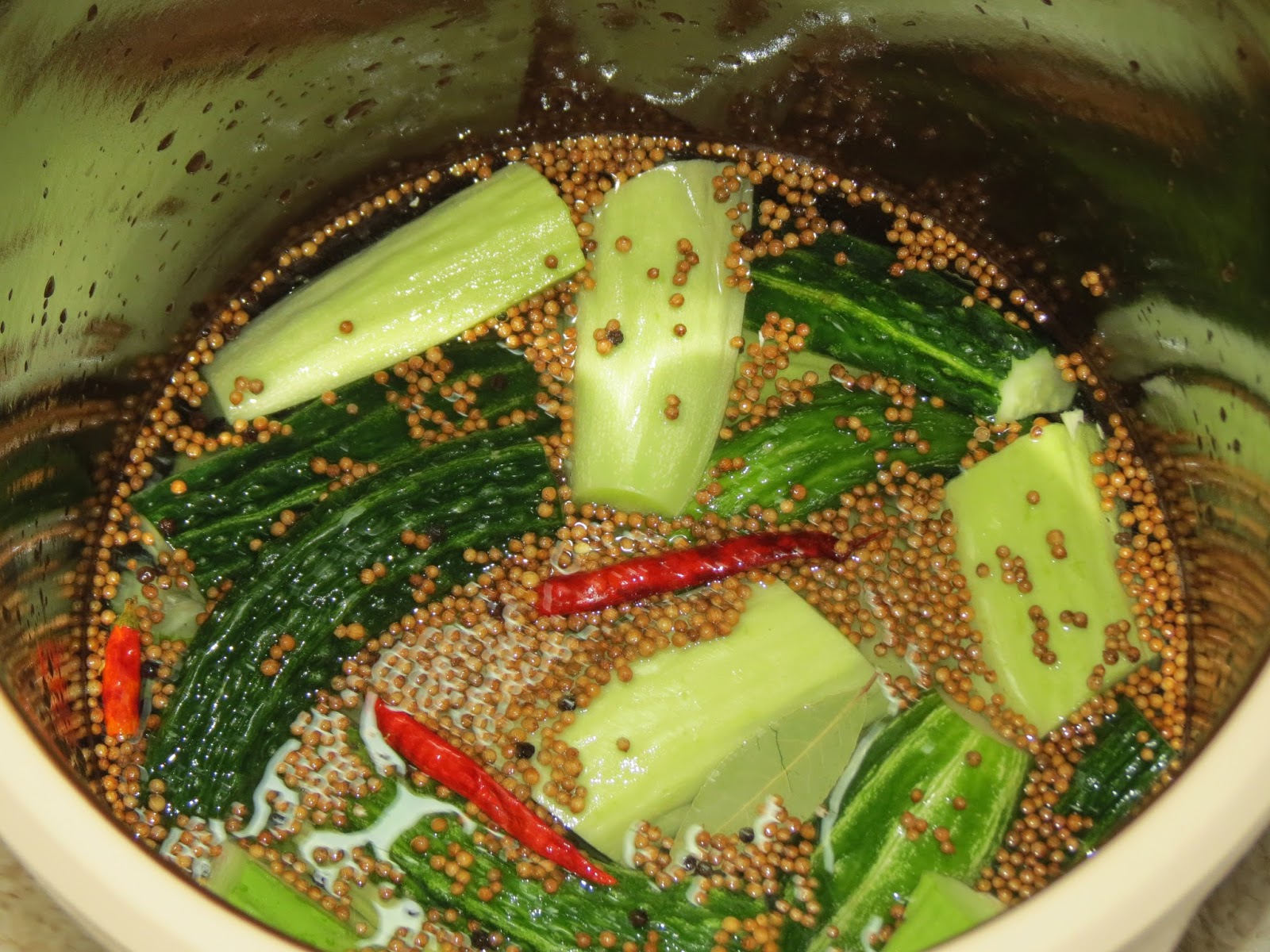
If you want to get right into making the pickles, here is Sandor's recipe for Dill Pickles from his website, and this from Mark's Daily Apple if you want to make just a quart _ same principle but useful for those with small gardens, no large vessel for fermenting, and a way to see how you like the process. This can be done in a gallon or quart jar, but due to the quantity of cucumbers, an old fashioned crock is our preference.
 

This is the latest combination of spices we have used, but do whatever combination of spice that suits your palate.

3 TB sea salt
6 cups water
4 teaspoons coriander seed
2 teaspoons black peppercorns
4 whole garlic cloves, smashed
2 fresh bay leaf (optional)

2 dried chili pepper(optional)
2 fresh dill heads
2 grape leaves
Cucumbers

We prefer cutting the cucumbers in half and then quartering them so they will fit in the jars once fermented. Dissolve the salt in the water. Add spices, grape leaves and cucumbers, and place a clean plate or cabbage leaf...  over them. Weight that down with i.e. a clean water-filled jug so that the vegetables stay below the brine while fermenting. Cover the crock with a clean towel.

The process can take up to several weeks; it is important to check them each day and skim any mold that might be accumulating. And too, you should enjoy a taste test to see how they are coming along. You will be amazed at what happens after only 3-4 days.

Once fermented transfer them to gallon or quart jars (along with the brine), refrigerate and enjoy over the next months!

cloudy brine and sediment is good
Cook's notes: depending upon the amount of cucumbers you have, the above ratio would either be increased or decreased. Other vegetables can be added as they become available from the garden_ carrots, cauliflower, green beans.

Should you prefer the vinegar and canned Dill pickles, here is a recipe, but I think once you have done this fermenting, there is no going back. 

Sunday, August 23, 2015

Eggplant 'Rosa Bianca'_ Grilled and Stacked

It deserves a post of its own.

Solanum melongena 'Rosa Bianca' is clearly our # 1 choice when it comes to wonderful and beautiful. We have tried a number of heirloom eggplants over the years and have enjoyed them all, but this is our 5th season for this variety.

S. melongena Rosa Bianca
Gorgeous lavender fruits streaked with colors of creamy white shading, this Italian heirloom has tender skin, great flavor, and did I say beautiful? Plus, the shape is perfect for roasting or grilling thick slices.

80-90 days to harvest, and as with all eggplant, they love sun and heat. Know the seed is slow to  germinate, but as gardeners we know patience is a virtue and with great reward.

Grilled Eggplant and Heirloom Tomato Stack with Balsamic Reduction from Diana's kitchen

Heirloom tomato, thickly sliced (1/2 to 3/4 of an inch)
kosher salt and freshly ground pepper
fresh mozzarella, sliced, about 1/2 inch
fresh basil, thinly sliced
Rosa Bianca eggplant, unpeeled and thickly sliced (1/2 to 3/4 inch)
1 egg, slightly beaten
Panko or bread crumbs
2 Tablespoons extra virgin olive oil

balsamic reduction (see below)

Slice the tomatoes and sprinkle each with a little kosher salt and freshly ground pepper, and set aside on a platter. Slice the soft mozzarella cheese, sprinkle with basil and put it aside.

Dip each slice of eggplant into the egg, then into the panko, and transfer to a heated frying pan with olive oil. Sprinkle with a touch of salt and pepper and saute until golden brown, several minutes on each side and until slightly fork tender and maintains some firmness. Remove and transfer to a plate for assembly.

Assemble: grilled eggplant, slice of mozzarella with basil, tomato, mozzarella, and top with another grilled eggplant. Drizzle with balsamic reduction. Um... reminds me of a portobello mushroom.


Balsamic Reduction

1/2 cup balsamic vinegar

Place the vinegar in a non-reactive saucepan. Heat on medium-high until it begins to boil, then reduce the heat and simmer uncovered until the vinegar becomes a syrupy consistency, 5-10 minutes. Set aside to cool.

It will become slightly thicker when cool; if it is too thick, I add a touch more balsamic; if it is too thin, put it back on the stove for further reduction. 1/2 cup of vinegar should yield slightly over 1/4 cup. Keep it stored at room temperature.